| Yoga |
 |
An
Introduction to Yoga |
What is Yoga? |
Yoga is derived from the word yoke which means union or joining. Hence, Yoga is literally the joining together of the finite self and the infinite self. The finite self is defined as the actual physical body and the experiences that we have physically. Everyone can relate to the physical body because it is a real entity that can be seen and touched. Infinite self is the inner self- the higher self-the spiritual self. |
The word
Yoga automatically calls to mind Sage
"Patanjali" the founder
and father of Yoga. He lived around
three centuries before Christ, and
was a great philosopher and grammarian.
He was also a physician and a medical
work is attributed to him. However
this work is now lost in the pages
of time. His best known work is Patanjali Yoga Sutras of Aphorisms on Yoga. The path outlined is called Raja Yoga or the sovereign path. It is so called because of the regal, noble method by which the self is united with the overself. Patanjali's Yoga has essentially to do with the mind and its modifications. It deals with the training of the mind to achieve oneness with the Universe. Incidental to this objective are the acquisition of siddhis or powers. The aim of Patanjali Yoga is to set man
free from the cage of matter. Mind is
the highest form of matter and man freed
from this dragnet of Chinta or Ahankara
(mind or ego) becomes a pure being. |
| |
The mind or Chinta is said to operate at two levels-intellectual and emotional. Both these levels of operation must be removed and a dispassionate outlook replace them. Constant Vichara (enquiry) and Viveka (discrimination between the pleasant and the good) are the two means to slay the ego enmeshed in the intellect and emotions. Vairagya or dispassion is said to free one from the pain of opposites love and hate, pleasure and pain, honour and ignominy, happiness and sorrow. |
The easiest path to reach this state of dispassion and undisturbed tranquillity is the path of Bhakti or love. Here, man surrenders his all-mind, soul, ego-to the Divine Being and is only led on by the Divine will. Self-surrender the Diving Name. Such repetition must not be mechanical but one-pointed and full of favor. For this, concentration is necessary. concentration can be there only if man has practiced to fix his attention on a particular object without letting it dwell on anything else. |
Concentration also calls for regulation of conduct if Bhakti must develop. Good cheer, compassion, absence of jealousy, complacence towards the virtuous and consideration towards the wicked must be consciously cultivated. |
There are also methods of regulated breathing which help reach concentration. |
Yoga is an art and takes into purview the mind, the body and the soul of the man in its aim of reaching Divinity. The body must be purified and strengthened through various practices. The mind must be cleansed of all gross and the soul should turn inwards if a man should become a yogic adept. Study purifies the mind and surrender takes the soul towards God. |
The human mind is subject to certain weaknesses which are universal. avidya-wrong notions of the external world, asmita-wrong notions of the external world, asmita-wrong notions of oneself, raga-longing and attachment for sensory objects and affections, dweshad is like and hatred for objects and persons, and abinivesha or the love of life are the five defects of the mind that must be removed. Constant meditation and introspection eradicate these mental flaws. |
The human body is a vehicle for journeying this life. It must be kept in proper form if the mind should function well. For this, there are practices too, but Patanjali does not elucidate on them. |
The Yoga of Patanjali is Ashtanga or comprised of 8 limbs. |
They are : |
1. Yama |
2. Niyama |
3. Asana |
4. Pranayama |
5. Pratyashara |
6. Dharana |
7. Dhyana |
8. Samadhi. |
Ahimsa (non-injury), Satya (truth), Asteya (non-covetousness), Brahmacharya (continence) and Aparagriha (abstinence from avarice) come under Yama. |
These five austerities are universal and absolute. Under no condition should they be deviated from. A Yogi must not cause injury or pain to another in thought, word or deed, One must not hurt even in self-defence. This is Ahimsa. |
Truth is concurrence between thought, word and deed. it must be true to fact and at the same time pleasant. If by speaking the truth, another is hurt it ceases to be truth and becomes himsa. There is a story which illustrates this point. |
In olden days there was a sage renowned for his austerities and observance of the vow of truth. It so happened that once when he was sitting by his little hut, a frightened man with a bundle ran past him and disappeared into a cave nearby. a couple of minutes later there came a band of fierce robbers with gleaming knives, apparently looking for this man. Knowing that the sage would not lie, they asked him where the man with the bundle was hiding. At once, the sage, true to his vow of not uttering falsehood, showed them the cave/ The cruel robbers rushed into it, dragged out the scared man, killed him mercilessly and departed with his bundle. the sage never realised God in spite of his austerities and tenacity for truth for he had been instrumental in the murder of a man. This is not the kind of truth that yoga requires. It would have been better if the sage had remained quiet for that would have saved the poor man. Great care is therefore to be exercised in speaking and each word must be carefully weighed before it is uttered. |
Yoga shows us all happiness is within our selves and trying to quench desires is like pouring ghee on fire which only makes it blaze more instead of putting it out. So with desire, It is never satisfied. yoga shows us that happiness for which we are eternally searching can be obtained through non-desire. |
To achieve a state of non-desire, the mind must be trained to think clearly. A healthy mind requires a healthy body. This is where Hatha Yoga comes in!! |
|
Yoga,as we have already seen,is the process of attaining self-relation.However,we are concerned solely with Hatha Yoga with its object of purifying the body.
Hatha is derived from Ha meaning the Sun and Ta meaning the Moon.Yoga is derived from the Sanskrit term 'Yug' which means "yoke"or' unite'.The two terms together denote the unification of the Sun and the Moon or the union of the Prana and Apana Vayus.This is a physical process regulating the inflow of breath in the two nostrils.But we must always remember that the purpose of Yoga,of any kind,is the evolution of the soul. |
 |
|
|
Hatha Yoga as known to us today is drawn mostly from Gheranda Samhita and Hathayoga pradipika.These two works seem to be from the same source since many lines from each repeat in the other. ; |
Hatha Yoga can be divided into 7 heads: |
1. Bodily purification |
2. Asanas |
3. Mudras |
4. Pratyahara |
5. Pranayama |
6. Dhyana |
7. Samadhi |
Anyone above 14 years of age can do Yogasanas.Sick people may also do them.Pregnant women must discontinue the practice after the 3rd month.Women must refrain from practice during the 4 days of menstruation each month.People suffering from heart disease must be careful and take up yogic practices only under expert supervision.Generally too,these asanas are best learnt from an able and competent teacher. |
Asanas are best performed in the morning on an empty stomach.Where time does not permit they can be done in the evening,but not permit they can be done in the evening,but at least 3 hours should elapse after the last meal.Regular practice at the same place and time gives good results soon. |
Diet must also be regulated.Vegetarians can carry on with their usual food but excessively spicy,oily and rich foods should be reduced gradually,and wherever possible eliminated.Meat,eggs,fish are to be avoided.So also hard drinks.Freshly cooked food,fresh vegetables,plenty of fruits and greens and milk are the best foods for practitioners of Yoga subject,of course,to one's resources.Canned,refined and processed foods are best avoided since they can cause faulty elimination. |
If Hatha Yoga is faithfully practiced,benefits will start showing in the form of a youthful face and figure,graceful posture and carriage,clear complexion,improved blood circulation and all-round general health. |
|
|
|
Benefits of Yoga |
The practice of Yoga not only works the physical body by keeping it fit while strengthening and elongating the muscles, it also helps the nervous and circulatory systems by purifying and balancing them. Yoga provides the skills necessary to connect mind, body, and soul. In today's world we are brought up with how to deal with the external world, but most rarely touch base on the inner world. Yoga will teach you how your body works, how to breathe properly, and how to use all of these techniques for your own benefit. This will enable you to understand and relate the mind and body together instead of separately. Yoga provides you with the tools necessary to quiet the mind so that you can access the natural state of oneness. |
In the past, traditional healers used Yoga postures as a method for healing emotional disorders and illnesses. As a result of regular practice, many benefits will occur. This includes greater endurance, flexibility, deeper breathing, and an overall improvement in mood and emotional well-being. |
The practice of Asanas promotes flexibility of the muscles and strength in the bones and tissues. It also massages the organs, brings balance to different internal and glandular functions, promotes the flow of vital energy, prana (also known as qi in Chinese, or ki in Japanese),and balances the physical and metaphysical parts of the body (koshas). |
Asanas are techniques that promote awareness, concentration, meditation, and relaxation through the physical body. As the practice becomes more regular, there are significant results. Such results include good mental and physical health through stretching, massage and the stimulation of the energy channels of the internal organs. |
Our bodies have a tendency to build up and accumulate poisons like uric acid and calcium crystals, just to mention a few. The accumulation of these poisons manifests in diseases and makes our bodies stiff. A regular Yoga practice can cleanse the tissues through muscle stretching and massaging of the internal organs. This brings the waste back into circulation so that the lungs, intestines, kidneys, and skin are able to remove toxins in a natural way. |
Scientific studies have shown that the practice of Yoga has curative abilities and can prevent disease by promoting energy and health. That is why more and more professionals have started using Yoga techniques in patients with different mental and physical symptoms, such as psycho-somatic stresses and different diseases. |
|
|
|
|
How to do it: Always do it on an EMPTY STOMACH. Sit in easy pose with the hands on the knees. |
|
Breath: Inhale through the mouth making a beak with the mouth and inhale as much air as you can into the stomach. Inhale in short, continuous sips.
Then apply neck lock and hold the air in. Roll the stomach to the left until you have reach half of the length of the time you are able to hold the breath in, then reverse the direction for the other half of the remaining time. When you can’t hold the air any longer straighten the spine and exhale SLOWLY through the nose. |
Benefits: This exercise adjusts the acid balance in the stomach, but it must be done daily without missing a day. |
|
|
| 2.Yoga For the Navel/Abdomen |
|
These are some of the many exercises there are to work on the abdominal area. |
 |
1. How to do it: Lie on the back and raise the head and both legs up six inches from the floor. Look at the toes. The arms go by the side, with palms facing each other. |
Breath: Breath of Fire. |
Benefits: This exercise will balance and stimulate the energy at the navel to flow properly. This will create coordination among all the organs in the body. It strengthens the abdominal area. |
|
| |
 |
2. How to do it: Lie down on the back and place the arms by the side with the palms facing down. Bring the left leg up 6-12 inches from the floor and hold it there. The right leg stays down on the floor. Then repeat in the other side. |
Breath: Breath long and deep through the nose. |
Benefits: It shapes and strengthens the abdominal area. |
|
| |
 |
3. How to do it: Lie down on the back and place the arms by the side with the palms facing down. Inhale and bring the left leg up 90 degrees. Exhale and lower it. Repeat with the right leg. |
Breath: Breath through the nose. Inhale when bringing the leg up; exhale when bringing the leg down. The breaths should be deep and powerful. |
Benefits: It shapes and strengthens the abdominal area. |
|
|
How to do it: These exercise need to be done standing up. Place the hands in pray pose with the side of the thumbs touching the sternum. Hold the position for 2-3 minutes with long deep breathing. |
 |
Benefits: It works on the eyesight. It clears the pharynx. It aids concentration. It strengthens the will power. It works on the intellect. Improves memory and mental fatigue. |
|
|
|
|
How to do it: Squat down with the heels on the floor. The hands go flat on top of the feet. Inhale and bring the hips up, exhale and lower them down. |
|
Breath: Breath through the nose. Inhale when bringing the hips up, and exhale when bringing the hips down. |
Benefits: The sciatic nerve hurts when it’s out of place. This exercise will place it back in its place. |
|
|
|
|
Most migraines are due to the tension. The following exercises work in migraines due to tension and stress. They stimulate the flow of circulation in the area. The blood carries the oxygen to that particular area. Then the oxygen makes the healing happen. |
|
How to do it: Place the thumbs on the cheeks, and massage in circular motion. |
Breath: Breath long and deep through the nose. |
Benefits: It releases tension. |
|
|
|
|
6.Yoga for the spine |
|
1. Hip Rotations |
|
|
|
How to do it: Sit down in easy pose (as shown in the photo). Place the hands on the knees bring the chest forward, then to one side, then push the lower back back, and bring the torso to the other side. Moving the lower back in a circle motion, in one direction first then the other. |
Breath: Inhale and exhale through the nose as you move. |
Benefits: Opens up the hip and releases the tension in the lower back. Great to start. |
| |
2. Spinal flex in easy pose |
How to do it: Sit down in easy pose (as shown in the photo). Inhale and bend the spine forward while bringing the shoulder blades back, then exhale and push the spine back. The eyes can be closed or opened. You can mentally chant the mantra SAT (truth) in the inhalation and NAM (name, identity) in the exhalation. Maintain the head at the same level, only the spine moves. To end, inhale and pull root lock for a few seconds then exhale. |
Breath: Inhale and exhale through the nose. |
Benefits: It releases the tension in the lower back. Stimulates the rise of the Kundalini energy through the spine. |
|
|
7.Yoga for the Neck |
|
1. Shoulder Shrough |
|
How to do it:Sit in easy pose and place your hands on the thighs. Inhale stretch the elbows and bring the shoulders as high as possible, then exhale and drop them down. Moderate to fast pace. |
Breath: Breathe through the nose. Inhale up, exhale down. |
Benefits: It releases the tension of the shoulders. |
| |
2. Neck Rolls |
How to do it:Sit in easy pose and place your hands on the knees. Bring the chin to the chest, then bring the ear to the left shoulder, then bring the head all the way back, then bring the ear to the right shoulder. Keep rolling the head in this direction, then switch. Make sure your shoulders are at all times down and the spine is straight. Pace: Slow to very slow. |
To end: Inhale and bring the head up in the center. Exhale. Relax. |
Breath: Breathe through the nose. It doesn’t matter where you inhale or exhale. |
Benefits: It releases the tension of the neck. |
| |
3. Nono |
How to do it:Sit in easy pose and place your hands on the knees. Inhale and bring the head all the way back to the left, then exhale and bring the head all the way to the right. (like saying NO) Repeat for a minute, then switch sides. |
Breath: Breathe through the nose. First- Inhaling left, exhaling right. Second- Inhaling right, exhaling left. |
Benefits: It creates more flexibility, and releases the tension of the neck. |
|
|
|
|
8.Yoga for anxiety |
For hundreds of years yogis have known that the mind only obeys to a one thing: breathing. Therefore we give so much importance to the practice of breathing control, called pranayama. |
|
The goal is maintain consciousness in the way we breathe, specially when the levels of stress begin to rise, whether external or internal causes like negative and/or obsessive thoughts. |
It doesn't sound very realist for a person that never has practiced breathing exercises to think about have all their attention in breathing in the middle of a hurricane. Nevertheless when these anxiety attacks happen, we only have two exits; to suffer it, or to give an opportunity and try some method as the one that we propose. |
They are basic breathing exercises. When you feel that you are losing control, sit down in a chair with the feet flat on the floor and the back straight, or lay on the floor or flat surface. Subsequently put both hands on the abdomen and feel the abdomen inflates in the inhalation, and comes back inside in the exhalation. |
|
|
|
9.Yoga for the insomnia |
When you can't sleep , start breathing ONLY for the left nostril. |
|
The left nostril is associated with the parasympathetic part of the brain whose qualities are rest and repair.
At the same time, the right nostril is associated with the sympathetic part of the brain whose qualities are energizing the body. |
How to do it: Sit or lay down on the bed and close the right nostril pressing it slightly. For a more comfortable and relaxed position, you can use the pillow, or an arm to cover it. You might have to stay on a side, so you can breath ONLY with the left nostril (inhalation and exhalation). |
Do the exercise for a minimum of 11 minutes or until you fall asleep. |
Probably is going to be difficult for you to inhale and exhale only for the left nostril, and maybe you'll feel like you'll drown. Be patient. You're not going to master the exercise the first time. But do it as better as you can. |
|
|
|
10.Yoga for weight control |
The exercises in each lesson are performed for 5 minutes, followed by a 5 minute rest, and repeated 4 times. |
|
The intention is to create pressure in certain organs to break down the inner layer of fats. |
A thin person will also find benefits in this set because it increases blood circulation. This is because the fatty layers break down the healthy tissue becomes stronger. |
For optimum results a healthy diet must be followed. |
|
|
| |
|
1. Diagonal Stretch- Tantric Sudra Siddhi (For the whole body) |
Lie on the back. Place the right hand under the neck. Bring the left arm over the head. Place the left leg over the right. Keep the knees straight. Hold for 5 minutes, and then repeat to the other side. |
This position holds pressure under the uterus, and the navel point. You will never have a heart attack. You can repeat this up to 4 times in an hour. |
|
|
| |
 |
2. Hastapadasan(For waistline & legs) |
1 - On the back alternately raise the legs 12 inches off the floor. 10 times each leg. |
2 - Then lift both legs 6 inches off the floor, and hold them there for 1 minute. |
3 - Now lift both legs and head 1 ½ feet above the floor. Hold for 3 minutes. |
4 - Relax on the back for 5 minutes. |
5 - Sit up and bring the head towards the thighs. Hands grab the ankles. Hold for 2 minutes. |
6 - Repeat 1, 2, 3, 4, 5 |
7 - Sit in a cross legged position and close the right nostril with the right thumb. Breathe long and deep through the left nostril. 3 minutes. |
8 - Relax for 10 minutes. |
|
|
| |
|
3. Spread the legs situps (For back and thighs) |
1 - On the back apart the legs and sit up catch the heels. Repeat 4 times. |
2 - Sit up and grab the left ankle with both hands. Lie back. |
3 - Sit up and grab the right ankle with both hands, and lie back. |
4 - Sit up grab both ankles, and continue again. 5 minutes |
5 - Relax for 5 minutes, and repeat the series 2 more times. |
|
|
| |
 |
4. Crow Pose (For lower stomach region) |
1 - Bend down keeping the arms stretch forward. Inhale when you go up, and exhale when you go down. This can be done in a circle on a group, or with partners one in front of the other. |
2 - It’s great for elimination, the rectum, and hemorrhoids. |
|
|
| |
 |
5. Angle Rowing (For pelvic region) |
1 - Sit up with the legs stretch forward. Bend forward, and grab the toes. Release the toes and lean back 60 degrees. Like rowing a boat. 5 minutes. |
2 - Relax during 5 minutes, and repeat again. |
|
|
| |
6. One Legged Pose (For navel Region) |
1 - Raise one leg 90 degrees keep it there. Then raise the other leg 6 feet off the floor. Keep there for 1 minute.
Then raise the same leg up to 9 inches up and hold for as long as possible.
Then raise the same leg up to 12 inches off the floor and keep there as long as possible. |
|
2 - Rest 5 minutes. |
3 - Repeat switching legs for another 5 minutes. |
4 - Lie on the back and bend one knee bringing it towards the chest, then switch legs in a pull push motion. 3 minutes. |
5 - Rest 5 minutes and repeat the whole sequence. |
|
|
| |
 |
7. Pawan Mukht Asana(For digestive system tuning and wind relieving, stomach to rectum) |
1 - On the back bring the left knee towards the chest. Keep the knee pressed while holding the breath in 5 to 10 seconds, and switch. Repeat 4 times. |
2 - Relax |
3 - Bring the knees towards chest, and start rolling back and forward during 1 ½ minutes. |
4 - Inmediatly hold knees to chest for 5 minutes. |
5 - Rest 5 minutes and repeat the whole sequence. |
|
|
| |
 |
8. Cobra (For hands, whole body, especially rectum) |
1 - Lie on the stomach and place the hands underneath the shoulders, then raise the head and chest slowly. Try to don’t use the strength of the hands. Hold it for 1 ½ minutes. |
2 - Relax, and repeat again. On the last time take 2 o 3 sec to lift the trunk while you inhaling, and lower it in another 2 o 3 seconds while exhaling. Do it 3 or 4 times only. |
This sequence keeps the spine flexible. It’s good for the muscles of the heart, abdomen, and back, also tones the nerves. Aids with female problems like leucorrhea, or menstrual difficulties. Rejuvenates the spinal nerves, and cures spinal misalignments. |
|
|
| |
|
9. Leg Raises on Stomach (Breaks up extra fat and shapes body) |
1 - On the stomach place the hands on Venus lock in the back, and raise the legs up. Hold the position for 1 to 3 minutes. |
2 - On the stomach grab the ankles and raise the head, the chest, and legs up. As high as you can. Hold for 1 ½ minutes. Rest briefly and repeat. |
3 - Relax for 5 minutes, and repeat. |
|
|
| |
 |
10. Dhanurasana (For burning extra fat) |
Lie on the abdomen place the chin on the floor raise the torso as in Cobra pose without touching the floor with the hands, hold briefly, and grab the ankles, go into Boat pose, rolling back and forward.Initially practice it for 5 to 10 second. After practicing it for few days you can increase the repetitions, once you are able to do 5 repetitions easily then reduce repetitions and increase the time up to 1 min.
People suffering from Back problems, TB in intestine, ulcer in stomach, harnia should consult Yoga expert before practicing this asana. Jerks and unbearable strains should be avoided. People suffering from Abdomen problems should not do this asana without consulting Yoga expert. |
|
|
| |
 |
11. Shalavasana- Locust Pose |
1 - Lie on the abdomen and make your hands like a fists place the chin on the floor, then raise one leg up. Hold it for a few seconds, and switch legs. Repeat 3 o 4 times each leg. |
2 - In the same position as above raise this time both legs, keep them together as high as you can. Repeat 2 more times. Note: Don’t do it if you have heart, or lung problems. It creates pressure in those areas. |
3 - Relax for 5 minutes. |
4 - On the same position as above, this time place the both fists on the groins, and raise legs alternatively at the rhythm of the breath for 1 ½ minutes. |
5 - In the same exactly position as above raise both legs up, and hold for 1 ½ minutes. |
6 - Relax and repeat 4 and 5 twice more with a break in between. |
|
|
| |
 |
12. Boat Pose(For whole body and fingers) |
Lie on the abdomen interlace your fingers and stretch the arms over the head, as if hugging the ears with elbows straight. Apart your legs as much as you can and raise legs and arms up. |
In the same position now apart the arms, and keep the legs together. Raise legs and arms as high as possible. |
In the same position as above, apart arms and legs, and raise both as high as possible. |
Relax, and repeat the whole sequence. |
|
|
| |
.jpg) |
13. Crocodile Pose (For shoulders and waistline) |
Start lying on the back, flip over to the abdomen, and keep flipping over and over across the place. Then switch to the right. Don’t help yourself with the hands. |
On the back do breath of fire, pumping the abdomen in and out during 1 minute.
Relax and repeat the whole sequence. |
|
|
| |
 |
14. Conch Sankasana (For stomach and under stomach) |
1 - Stand and with the right hand grab the left wrist, and twist to left and right. 1 long minute. |
2 - Switch hands and repeat. 1 long minute. |
3 - Stand with hands at the waist twists right and left. 1 minute. |
4 - Lock the hands in the back and move to one side, back, forward, and to the other side, drawing a circle with the torso. 1 minute. |
5-Relax and repeat the whole sequence. |
|
|
| |
|
15. Stomach Pump & Uddiyana Bhanda (To regain shape after breaking up fat) |
On the back apply neck lock and pump the stomach during 1 minute. Then apply mul bhanda and pump the stomach for another minute. Then apply diaphragm lock, or Uddayana bhanda and hold as long as possible. |
Relax and repeat again. |
|
|
| |
|
16. Pivot-Swivel Of Hips |
Lie on the back bring the knees towards the chest, apart the knees, and let the feet loose. Then move alternatively one knee closer to the chest by moving the hip, not the leg. 3 minutes. |
Excellent for women because adjust the hips, good for liver, and lower system. It also puts the womb in the perfect position. |
On the back stretch and apart arms and legs, and raise the hips up with the help of the feet, hands, and head. 1 to 5 minutes. |
In easy pose grab the shins and inhale flex the spine forward, and exhale back. Keep the head at the same level. 3 minutes. The hips must roll and you must sweat. |
It releases the tension in the lower back. If you sweat you are doing it correctly. |
Relax on the back and visualize and angel hugging you. |
These positions are not part of the set, but they are known as good stimulators of the metabolism. |
|
|
| |
 |
17. Wheel Pose |
On the back bent the legs place the arms back hands on the floor. Inhale and bring the hips up, full bridge, or half bridge.1 to 3 minutes. |
It strengthens the lower back, and brings the energy flow up. Good to stimulate the metabolism. |
|
|
| |
 |
18. Shoulder Stand And Plow Pose |
Lie on the back bring both legs, and lower body up. Place the hands on the back. Look at your chest, and do breath of fire for 1-3 minutes. |
Then lower the legs over the head, try to keep knees straight, and place the arms by the side with the palms facing down. Do breath of fire. 1 to 2 minutes.; |
Lower your body slowly vertebra by vertebra. |
Relax. |
It stimulates the metabolism. |
|
|
| |
 |
19. Pranayama For Control Of Metabolism |
If you want to control your eating you have to control your metabolism. This pranayama will allow you to take control over the metabolism. |
Breathe through the left nostril for 31 minutes a day for 90 days. |
Once you can control this you can control anything! |
|
|
|
Asanas |
The asanas are poses mainly for health
and strength.There are innumerable asanas,
but not all of them are really necessary. Practice each pose starting with a few
seconds in the beginning and gradually
increase the period to 15 minutes an more. |
These poses are so designed by the ancient sages who discovered them,that enable one to sit in the same pose for hours together at a stretch steadily and without jerks.This steady posture enables one to attain one-pointedness of mind. |
Padmasana is the famous lotus-pose commonly known as the Buddha pose.Siddhasana is another pose generally used for meditation. |
Practice each pose starting with a few seconds in the beginning and gradually increase the period to 15 minutes an more. |
The following points are important while
practising asanas: |
(1) Always do asanas in a well-lit, clean
and ventilated room.If you are one of
those lucky few who can di it in the open
in the privacy of your compound or terrace,
so much the better.As far as possible,
close the door of your room so that you
are left undisturbed by people walking
in and out of it. |
(2) Wear minimum clothing, preferably
cotton so that it dose not interfere with
breathing and perspiration.Discard all
tightfitting under-garments like corsets,
belts and brassiers. Remove all footwear. |
(3) Do the asanas on a blanket folded
twice spread over a carper.Use a bed-sheet
over the blanket so that the woolen fibers
do not stick to your lips or nose when
you have to do the asanas that require
you to lie on your stomach.It should not
be too soft nor too hard. |
(4) Tie your hair simply.Remove all pins
and broaches and if you wear a bun , make
sure it dose not protrude unduly as to
come in the way of your lying flat on
the carpet. |
(5) Always perform asanas early in the
morning.If this is possible,the next best
time would be evening around dusk. |
(6) Never do asanas on a full stomach
immediately after a meal. |
Some of the asanas are mentioned below: |
|
|
| |
1. Sukasana or Easy pose |
Easy pose is one of the most commonly used of the sitting poses. This is done by sitting on the buttocks, crossing the legs, and keeping the spine straight. It doesn’t matter which leg you choose to place underneath the other. |
 |
|
|
| |
2. Padmasana or Lotus pose |
Padmasana
is an excellent posture for all meditative
and pranayamic practices.It loosens
the joint in the lower parts of the
body and removes rheumatism.It tones
up the three humours (wind,phlegm
and bile)in the system harmonising
their functions.It strengthens the
nerve and muscles of the legs and
thighs. If you are used to eating
on the floor as we do in India,Padmasana
will be easy to assume.Otherwise,do
not force yourself as this can injure
you. By gradual practice,train the
legs to assume the pose. However,three
months should be enough even for one
with very stiff legs to assume Padmasana
properly.This is the best pose for meditation and japa.The sole of the two feet upturned and resting on the thighs resemble the petals of lotus and hence,the name. |
.jpg) |
1. Spread a blanket or carpet on the floor. If available , a deer skin can also be used and is always highly recommended for dhyana or japa. |
2. Sit erect on it with the two legs out stretched. |
3. Take hold of the right foot and bending it at the knee,place it high on the thigh,the sole upturned. |
4. Now, catch the left foot and place it symmetrically across the right ankle so that the foot rests on the right thigh. |
5. Adjust the feet high up against the thigh so that the upturned heels are as near the abdomen as possible |
6. Place the palms one on top of the other over the upturned soles. |
7. Make sure the head,the neck and the trunk are in one straight line and the back is straight. |
8. Also make sure both the thighs and knees are pressed against the floor.You will find in the beginning one of the thighs slightly off the ground.Slowly and carefully press the thigh against the ground and retain the pose for a few seconds. |
|
|
| |
3. Bhujangasana or Snake pose |
Bhujangasana is one of the
best asanas for all spinal and back-ache
problems.The health and youth of a person
depend upon the elasticity and suppleness
of his back-bone.Most of us have noticed
how as old age sets in,the back begins
to stiffen.Bhujangasana tones up the entire
spinal column pulling at the same time,
the abdominal muscles.The pressure on
these muscles gives relief from constipation.This
asana is of particular help in toning
up sluggish uterine muscle and overies.It
is a powerful antidote against wet-dreams
and leucorrhoea.It develops the chest
and firms the bust.
The asana derives its name because it resembles a snake with its hood raised.The head and chest raised represent the hood while the rest of the body lying flat,the body of the snake. |
 |
1. Lie down on the carpet on your stomach,face down. |
2. Relax all your muscles. |
3. Place the palms of the hand on the floor in line with the sholders, each plam facing down and about 1 inch away from the tip of the shoulder. |
4. Keep your feet together with the toes touching the ground. |
5. Now slowly raise the head off the ground and take it up gradually so that the spine curves beautifully backwards.Do not exert force or do it suddenly.Each movement should be slow,continuous and without jerks. |
6. Raise the spine little by little so that each vertebrate is gradually loosened. |
7. Keep the body from the naval downwards touching the ground. |
8. Retain the pose for a few seconds. |
9. Gradually bring down the back to the original position of lying flat on your stomach. |
10. Repeat the asana 6 times. |
Once you have learnt the procedure of pose step-by-step, practice doing it with breathing. |
Breathing : |
(a) Exhale completely when lying flat. |
(b) Inhale slowly as you gradually raise the head and spine to form the hood. |
(c) Retain the breath so long as you remain in the pose. |
(d) Exhale slowly as you come down to your original position. |
|
|
| |
4. Siddahasana or Pose of the adept |
Siddhasana is also one of the best postures for meditation and concentration.It is supposed to help one get established in Brahmacharya or celibacy. |
 |
Siddha means an adept. Siddhasana is the
pose of an adept. |
1. Sit erect on the carpet with the
legs outstretched as in the previous pose. |
2. Take hold of the left foot,behind
it at the keen and place the heel such
that it presses against the anal aperture. |
3. Next,bending the right foot also at
the keen,place the right heel against
the root of the reproductive organ taking
care to see no pressure is felt on the
delicate organs. |
4. Place the hands with the palms one
on top of the other on the feet as in
Padmasana. |
5. Make sure the head, neck and trunk
are in one straight line. |
|
|
| |
 |
5. Veerasana or Warrior pose |
Veera means brave. The way a brave man takes position while attacking his enemy, the similar position is formed in this asana, hence it is called as Veerasana. |
Procedure |
Pre Position : Standing Position. |
1.
Take the left foot forward and place the left foot on the floor at th e maximum distance from the initial position. |
2.
Bring both the hands together, join the palms and place them on the knees of the left leg. Bend the left leg in the knee in such a way that the thigh and the calf come in 90 degrees. Keep the right leg straight. |
3.
Raise the joined hands up and take them back above the head and then without bending the hands in the elbows, bend the head backward and keep the sight backward down. |
Position :
The front leg should be bent in 90 degrees angle and the back leg should be straight. Keep the toes frontward. The back leg, the back, the neck and both the hands form a very good arch in this position and this forming of arch is desirable, too. The body should be weighed backward and keeping the arms near the ears, the neck should also be bent downwards. |
Releasing |
1.
Start bringing the body forward and place the hands on the knee. Keep sight to the front |
2.
Straighten the knee and restore the hands to their original place. |
|
3.
Restore the left leg to its place and take up standing position. |
|
Duration : It should be maintained for at least one minute, to have the desired strain and benefits; with practice, duration can be increased to three minutes. |
|
Internal Effects : In this asana the joints of the legs, the waist, the spinal column and the neck get curved in opposite direction. As a result of this, the blood circulation to these joints is regulated. The spinal column becomes elastic and its functioning improves. There is pressure on the digestive organs and the belly gets stretched, which promotes their functioning. |
|
Precaution : The process of the backward bending should be slow and controlled, else it becomes difficult to maintain the balance. The loss of balance may prove injurious to certain parts of the body. Slow and controlled movements help in having halt at the needed point and avoiding the unwanted strain. |
|
|
|
| |
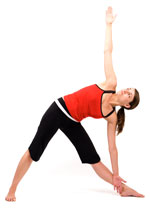 |
6. Trikonasana or Triangle pose |
In this asana the position of the body becomes like a triangle (trikon). And hence, it is called Trikonasana. |
Procedure |
Pre Position : Standing Position. |
1.
Lift the left leg and place it at a maximum distance towards the left. |
2.
Turn the toe of the left foot towards the left and inhale. |
3.
Exhale and bend the left leg in the knee and place the left hand palm near the left foot toe. |
4.
Take the right hand forward straight above the right ear and continue smooth breathing. |
Position : It is necessary to keep the right hand, mid body and right leg in one straight line in this asana. The neck and the waist should be kept straight. The arms of the right hand should be kept touching the right ear. At this stage, the left leg is kept bent at 90 degree angle, the left arm is kept straight & its palms placed on the floor. In this position the weight of the whole body comes on the left hand. |
Releasing |
|
1.
Exhale and inhailing, bring the right hand to its original place. |
|
2.
Straighten the left knee and bring the left hand to its original place. |
|
3.
Turn the left leg toe to front. |
|
4.
Bring the left leg near the right one and take up the standing position. |
|
Duration : It should be kept for one minute on each side. |
|
Internal Effects : In this asana the weight of the body comes chiefly on the calves of the bent legs and on the muscles of the hand resting on the floor and has nice effect on them. The stretching of the body has good effect on the muscles of those parts and improves their functioning. This asana is useful for the joints of the waist. |
|
Precaution : Persons having complaints regarding their waist and the spinal column should do this Asana under the guidance of Yoga Expert. |
|
|
|
| |
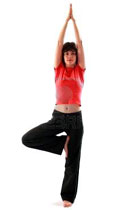 |
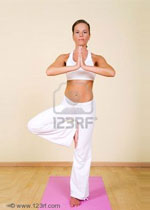
7. Vrikshasana or Tree pose |
Position : Except the toes, the whole body right from the heels to the fingers of the hands, is stretched upward. Pull the hands upward as much as possible. The more the body is kept stretched, the more it is possible to keep the balance. Keeping the legs stable, one should pull the body upward, thinking that he is being pulled up by some force. Taking the asana position continue smooth breathing, and keep the sight and the mind fixed, as looking here and there will disturb the balance of the body. |
Releasing |
1.
Inhale, and exhailing bring both the hands down from the sides. |
2.
Bring the heels on the floor and take up standing position. |
Duration : As this asana involves balancing, it is enough to maintain it for one minute. To have certain special results, one should increase this duration to three minutes. |
|
Internal Effects : In this asana all the muscles are stretched in one direction at one time and then relaxed. |
|
Precaution : The asana being simple there is nothing to bother. However, while stretching the body upward, one should take care to maintain the balance. |
|
|
|
| |
|
8. Dhyan Mudra or Meditation Gesture |
Pre Position : Sitting Position. |
Procedure : Palms are kept open and tips of the thumb and index fingers of both the hands are joined together forming a circle in between them. Remaining 3 fingers are kept together and relaxed. This position of the hands is called Dhyana Mudra. |
Position : In sitting position wrists of the hands in this Dhyana Mudra posture are kept on the respective knees and palsm facing upwards. |
|
|
| |
 |
9. Swastikasana or Auspicious pose |
In this asana one leg is placed on another in a peculiar way and then the position is stabilized. Since ancient times this Swastika is considered as auspicious symbol and this asana tries to attain the shape of swastika with legs placed on each other. |
Pre Position : Sitting Position. |
Procedure |
1.
Spread both the legs and keep them at a distance of 1 to 1.5 feet. |
2.
Bend left leg in knee and place its soul touching inner side of the right thigh. |
3.
Bend right leg in knee and place its foot in between the thigh and the calf of the leg. |
4.
Keep the wrists of both the hands on the respective knees and take Dnyana Mudra. Continue normal breathing. |
Position
In this asana the position of the body is stabilized. Keep the backbone erect and sight straight. This asana is particularly useful for meditation and concentration. |
Releasing |
1.
Bring the hands beside the waist. |
2.
Straighten the right leg in the knee. |
3.
Straighten the left leg in the knee. |
4.
Get both the legs together, take the sitting posture. |
Duration : Within 10 to 12 days' practice of this asana, one can maintain this asana for 10 minutes. After more practice this period can be increased to 2 to 3 hours. Sitting for long in this asana alone can make one experience the pleasure of this asana. |
Internal Effects : As the backbone is kept erect in this asana, its functioning is greatly improved. Dnyana Mudra further helps in stabilizing pulse beats. Consequently strain on muscles is reduced, which in turn reduces strain on heart.
Also breathing slows down, collective effect of all this is one can achieve concentration of mind. |
Precaution : This asana is very simple and anyone can practice. |
Do's |
1.
Keep the legs straight in knees with toes pointing to the sky. |
2.
Raise the lower back & buttocks off the ground. |
3.
Hands, upper arms & elbows on the ground while supporting the waist with the hands. |
4.
Shoulders resting on the ground. |
5.
Head straight and eye sight fixed on the raised toes. |
6.
Note that the legs can be taken towards head for maintaining the balance.
Advanced variation - legs can be straightened at 90 degrees to the floor. |
Dont's |
1.
Do not bend the legs in knees. |
2.
Do not take the legs over your head in the position, but you can take the legs over your head while taking & releasing the position. |
3.
Do not move the neck while in the position. |
4.
Do not keep the legs and back in one straight line as in Sarvangasana (Shoulder stand). |
|
|
| |
.jpg) |
10. Parvatasana or Mountain pose |
The body is stretched to look like a mountain peak and so it is called the Parvatasana (parvat means mountain in Sanskrit). |
Pre Position : Sitting Position: Padmasana |
Procedure |
1.
Take both the hands forward and lock the fingers of both the hands together. |
2.
Take the hands over the head and turn the palms downside up facing the roof. Stretch the body upwards with the arms stretched towards the sky. |
3.
Stabilize the position and continue normal breathing. |
Position
In this asana stretching of the body is important but body is not actually lifted. |
Releasing |
1.
Relax the body and bring the hands as in position 1 in figure above. |
2.
Take the position as in Padmasana. |
3.
Straighten the left leg in the knee then straighten right leg. |
4.
Get both the legs together, take the sitting posture. |
Duration : You can maintain this asana for long time without any problem. |
Internal Effects : Stretching the arm, back and abdominal muscles improves the functioning of theses parts of the body. This helps cure certain problems of spinal column & cord. |
Precaution : This asana is very simple and anyone can practice. |
|
|
| |
 |
11. Akarna Dhanurasana or Bow pose in sitting |
In this asana the body is stretched more like a string of bow when pulled at the time of archery. |
Pre Position : Sitting Position. |
Procedure |
1.
Bend the left leg in knee and keep the foot on the thigh of right leg. Keep the right leg straight. |
2.
Hold the big toe of the left leg with right hand, hold it between the thumb and index finger and other 3 fingers to have a good grip of the thumb. Hold big toe of the right leg with left hand. |
3.
Exhale and inhaling start lifting the left foot with the right hand and pull it up to ear. Keep the trunk and neck erect and the sight fixed on the other end of the left hand. |
4.
Continue normal breathing. |
Position
While trying to raise the foot up to ear, one tends to bend neck. But this is wrong, initially it may be difficult but it does not matter. Only care should be taken to keep the neck and trunk straight. Try to pull up the foot as much as possible. |
Releasing |
1.
Inhale and exhaling, start bringing the foot down and place it on the thigh. |
2.
Restore the hands to their place. |
3.
Take the left foot to original position. |
Duration : This asana exerts great strain and one can't maintain it for long but with practice one can maintain it for up to 30 seconds. |
Internal Effects : In this asana great strain is exerted on hand, legs and joints of waist and the knees. Consequently the efficiency of the organs increases. |
Precaution : One should avoid the temptation of attaining the ideal position if strain is unbearable. |
|
|
| |
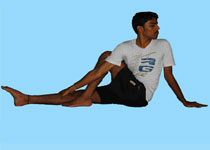 |
19. Vakrasana or twisted pose |
This Asana is designed to twist the spine to the right and left side in from its erect po |
Pre Position : Sitting Position. |
Procedure |
1.
Bend the left leg in the knee and place its heel near the thigh. Keep the sole of the left foot flat on the floor and the thigh and knee touching to the chest. |
2.
Place the left hand in front of the right hand in such a way that the fingers of both the palms face each other and the palms remain flat on the floor. |
3.
Now turn the neck and the trunk to the right, twisting the spine and look back above the shoulder. Continue smooth breathing. |
Position |
1.
In this Asana the spine is to be kept straight. |
2.
The lower end of the spine and both the hips be placed well on the floor and stabilize them. |
3.
Then with the support of the neck and shoulders twist the upper vertebrae to the right. At the same time, the standing knee be kept close to the chest. |
4.
Alongwith the neck, the sight should also be turned to the right side and stabilize it in that direction. |
Releasing |
1.
Turn the neck to the front. |
2.
Restore the hand to its place. |
3.
Straighten the left leg and take the sitting position. |
Note: Following the above mentioned process, practice this Asana placing the right leg in folding position. |
Duration : This Asana should be retained for minimum two minutes on each side. With more practice this duration can be increased to six minutes. |
Internal Effects : The elasticity of the spine increases as it gets twisted in its erect position. Alongwith the spine the belly and other internal organs also get twisted and receive the desired strain. It also has very good effect on the spinal cord and its functioning is improved. |
Precaution : One should avoid the temptation of attaining the ideal position if strain is unbearable. |
|
|
| |
 |
12. Ardhamatsyendrasana (half spinal twist) |
Half Spinal Twist pose is one of the best and most important asanas in Hatha Yoga. It has a huge amount of benefits which cover all the body systems. |
Full Spinal Twist position was the favourite meditation pose of the Sage Matsyendranath so this pose is named after him. However, as it is a little difficult to practice a simplified form Half Spinal Twist came about. |
Taking the asana position |
Bend the left leg and place the left foot on the ground over the right knee. |
Bend the right leg and fold it so that it is resting on the ground with the right heel near the left buttock. |
Bring the right hand over the left leg and grab the big toe of the left foot. |
Inhale and exhaling twist the trunk of the body as much as possible, turning the neck so the gaze is over the left shoulder and encircle the waist with the left hand with the palm facing outwards. Continue to maintain the asana, breathing normally |
The asana position |
In this position there is a strong twist on the spine and abdomen. The right arm is pressed against the left knee and the left arm is wrapped behind the back, leading to an increased twist on the body. The chest is open and the spine is erect. One side of the abdomen is compressed and the other side is stretched. The right leg and knee remains on the floor. The left knee should be close to the right armpit. |
Releasing the asana position |
1.
Inhale and exhaling turn the neck back to face the front. |
2.
Release the hands and place them beside the body. |
3.
Straighten the right leg. |
4.
Straighten the left leg and return to sitting position. |
5.
Practice the same on the opposite side. |
Anatomical focus : The spine, hips, abdomen, chest and arms. |
Awareness : The twist on the spine, abdomen and relaxed breathing mostly focusing on chest breathing. |
Do's |
1.
With the right hand, hold the left big toe from the left of the left knee. If it is difficult to hold the toe then one can hold the ankle or raise the toes keeping the heel on the ground. |
2.
keep the spine vertical, do not bend or drop the shoulder, you can keep the hand on the ground to support the shoulder. |
3.
Encircle the lower back with the left arm, palm facing outwards. |
4.
Turn to the left side in the spine; turn the shoulders and head to the left. |
5.
Try to keep both of the buttocks firmly on the ground. |
6.
Only twist as far as you can and keep your back and neck straight. |
Dont's |
1.
Lift either of the buttocks off the ground or sit on the heels. |
2.
Let the back or neck bend forward. |
3.
Overstrain the knees and hips. |
4.
Lift the left sole of the foot from the floor. |
Benefits |
1.
Increases the elasticity of the spine, tones the spinal nerves and improves the functioning of the spinal cord. |
2.
Stretches the muscles on one side of the body whilst compressing the muscles on the other side. |
3.
Relieves back pain and stiffness from between the vertebrae. |
4.
Useful for slipped disc. |
5.
Massages the abdominal organs and increases the digestive juices making it useful for loss of appetite and constipation. |
6.
Useful for diabetics, with concentration on the pancreas. |
7.
Regulates the secretion of bile and adrenaline. |
8.
Relieves tension that may have built up in the back from forward and back bending asanas. |
9.
Opens the chest and increases the oxygen supply to the lungs. |
10.
Loosens the hip joints, relieving stiffness. |
11.
Releases tension in the arms, shoulders, upper back and neck. |
12.
Increases purification of the blood as well as the internal organs. |
13.
Improves round shoulders |
Duration : To begin with this asana may be held for only a short time but should gradually be built up to 2 minutes. After more practice it can be held for up to 5 minutes on each side. |
|
|
| |
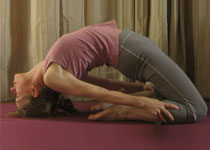 |
13. Vajrasana or Thunderbolt pose |
Like Padmasana, this is also the Asana for meditation. One can sit comfortably for a prolonged period in this Asana. |
Pre Position : Sitting Position. |
Procedure |
1.
Fold the left leg in the knee and place the toe on the floor. |
2.
Fold the right leg in the knee and place the toe on the floor and join the two toes. |
3.
Sit on the pit formed by the parted heels. |
Position
It is important to keep the spine, the neck and the head, upright in one straight line in this Asana. Keep the sight fixed at the level of the height. Don't have any pressure on the hands. The whole weight of the body be set on the spine. Continue smooth breathing, when the final position is attained. |
Releasing |
1.
Remove the palms from the knees and bring them to the sides. |
2.
Take out the left leg and straighten it. |
3.
Take out the right leg and straighten it. |
4.
Take the sitting position. |
Duration : After a little practice, this Asana can be maintained for a long time. In the daily routine it should be kept for five minutes to experience good results. With more practice it can be kept for three hours. |
Internal Effects : Along with the body, the mind also gets stabilized in this Asana. Hence, it is preferred for meditation in this Asana. Hence, it is preferred for meditation and concentration. This Asana is alsofound to be good for Pranayama.
The special fold of the legs forms one Bandha in this Asana. Consequently the blood circulation in the waist-downward parts is controlled. For this reason this Asana is recommended after Shirshasana. |
Precaution : The people having stiff joints and whose movements have become difficult, should practice this Asana with a lot of care. Such persons should practice this Asana after getting the joints free and relaxed. |
|
|
| |
 |
14. Paschimottanasana (half) (half forward bend) |
Ardha Pashchimottanasana is not an independent Asana. But since Paschimottanasana (full) is difficult to practice, Pashchimottanasana (ardha) is designed to enable the body to take the full position later. |
Pre Position : Sitting Position. |
Procedure |
1.
Fold the left leg in the knee and place the heel of the left foot near the thigh of the right leg. |
2.
Only inhale. |
3.
Exhaling, hold the big toe of the right foot with the left hand and encircle the right hand round the waist. |
4.
Exhale completely, and bend downwards and touch the forehead to the knee. Don't allow the knee to raise. Continue smooth breathing. |
Position : The process of downward bending is the same as in Pashchimottasana (full). In this Asana one leg is folded and the calf and the thigh are kept to the floor. |
Releasing |
1.
Exhale, and inhaling, start raising the head. |
2.
Restore both the hands to their place. |
3.
Straighten the left leg and take the sitting position. |
Note: Practice this Asana by folding the right leg making the relevant changes. |
Duration : Initially, even if it is maintained for thirty seconds, one experiences the benefits. Of course, after practice, it should be increased to four to five minutes. |
Internal Effects : Basically this Asana prepares the body for Pashchimottanasana (full). |
Precaution : While bending downward, there is the possibility of the knees and thighs being raised, and this should be avoided. |
|
|
| |
 |
15. Paschimottanasana (full) (forward bend) |
The front side of the body is called east side, while the back side is called the west side. In this Asana complete back side, i.e., the west side, right from the heels to the forehead, gets stretched and therefore, it is called 'Pashchimottanasana'. |
Pre Position : Sitting Position. |
Procedure |
1.
Only inhale. |
2.
Exhale, and hold the big toes of both the feet with both the hands. |
3.
In exhaled state bend downward and rest the forehead on the knees. Continue smooth breathing. |
Position |
1.
After bending down, keep the heels, calves, thighs completely touching to the floor, keeping the spine straight, rest the forehead on the knees and continue smooth breathing. Try to rest the elbows on the floor. |
2.
Since here the abdomen gets completely folded, it becomes necessary to bend only after complete exhalation. |
3.
In exhaled state bend downward and rest the forehead on the knees. Continue smooth breathing. |
Releasing |
1.
Exhale, and inhaling, start raising the head. |
2.
Restore the hands to their place and take up the sitting position. |
Duration
One finds it difficult to take up this Asana initially. But with practice and patience it can be maintained for thirty seconds. Later one certainly succeeds in having the final position and the duration is also increased to three minutes. |
Internal Effects |
1.
As the whole of the west side gets stretched, they get purified and their functioning is greatly improved. At the same time, the muscles of the front side get contracted and there is pressure on the lungs, intestines and other internal juice producing glands. As a result of this their functioning is also improved. |
2. It is very useful in setting right the troubles concerning the lumber part of the spinal cord and the digestive system. |
3.
Further, there is very sensitive part in our body known as Kundalini lying in dormant stage. This Asana is supposed to activate it. |
Precaution : It has been said that this Asana is useful for the troubles of the spine. Yet people suffering from such troubles should practice this Asana only after consulting some Yoga experts. |
|
|
| |
|
16. Januhastasana |
In this asana the body is stretched more like a string of bow when pulled at the time of archery. |
Pre Position : Sitting Position: Vajrasana. |
Procedure : In Vajrasana place both the palms on the ground ahead of knees touching each other, push neck backwards and chest forward with waist pushed downwards, in this posture relax all the muscles, continue normal breathing. |
|
|
| |
 |
17. Uttanpadasana with both legs (leg raised pose) |
In this asana both the legs are raised upwards and so is called Dwipada(both legs) Uttanpadasana. |
Pre Position : Supine Position. |
Procedure |
1.
Exhale and inhaling start raising both the legs upward and stop when they make angle of 90 degree with the floor. |
2.
Keep the sight at the toes of the feet. |
3.
Continue normal breathing and try to maintain the posture steady. |
Position
: While raising the legs, it is necessary that the legs be kept straight and close together. Keep the toes together and stretched towards sky. |
Releasing : Inhale and exhaling, bring both the legs down, back on to the floor. |
Duration : Though this asana appears to be simple, it is difficult to maintain the posture. To start with try to maintain this for 5 to 10 seconds. Do not take unnecessary strain, if you feel uncomfortable then release the posture immediately. |
Precaution : One should avoid movement of legs with jerk or speed. The movements should be controlled otherwise this asana can strain muscles. |
|
|
| |
 |
18. Sarwangasana (shoulder stand) |
Sarvangasana is one of the best and most important asanas in Hatha Yoga. It has a huge amount of benefits which cover all the body systems. |
Taking the asana position |
Exhale and while inhaling, contract the abdomen and slowly raise both the legs to a 90 degree angle from the floor. |
Exhaling raise the waist and the hips from the floor and take the legs backwards over the head. |
Inhaling raise the back and the legs up into a vertical position, placing the hands on the upper back for support. The chin should rest against the chest, creating the chin lock. Fix the eyesight on the toes and maintaining the asana, continue normal breathing. |
The asana position
One should concentrate on getting the legs, waist and the back in one straight line and making this line 90 degrees with the ground. In this asana the arms up to the elbows are placed on the floor, shoulder width apart. The body from the feet to the shoulders is in a straight line. The chest is pushed forward and the chin is placed in the throat pit / jugular notch forming a tie which is called 'Jalandhar Bandha'. All the pressure is on the neck, shoulders and the back of the head. The hands are placed on the back ribs, the legs are straight and the feet are relaxed. |
Releasing |
1.
Inhale and while exhaling bend in the waist and lower the legs over the head, releasing the hands from the upper back.
Inhaling slowly lower the back to the floor, keeping the legs at a 90 degree angle from the floor. Here lower the back very slowly, vertebrae by vertebrae.
Exhaling slowly lower both legs back to the supine position. |
Anatomical focus : Neck, shoulders, abdomen |
|
|
|
Meditation |
There are many articles, books, and lectures that teach on the practice of meditation. Yet most people do not understand exactly how to achieve a real state of meditation. In this article, we are going to discuss in detail the principal steps involved in meditation, along with some tips to help you in the process. There are many different aspects which need to be considered about meditation similar to the many aspects of Yoga. These include such features as breathing, control of the senses, concentration, and mantras. There is also a mental process such as how eating, sex, and sleep affect your meditation. Also, it is important to learn the best time and place to meditate, as well as sitting positions. There is a myth that when you sit down you should be able to quiet the mind. We have thousands of thoughts per wink of the eye. When you bring the focus inwards, you become aware of the mental chaos of your mind. Distractions are the rule because the mind never stops. Through meditation you can create stillness and calmness which can serve you for a lifetime. |
|
|
|
Best Places to Meditate |
|
The best place to meditate should be a quiet place in the house where there are no people passing by. It could be a room or small corner, but should be ventilated. The temperature of the room shouldn't be too cool or too hot, and the room shouldn't be too bright either. |
You may want to make your meditative experience more special by adding some candles, photos of a person or deity that inspires you, incense, and other inspirational items. You can also play some relaxing music. All of this is nice but not necessary. |
|
|
Best Time to Meditate |
|
Meditation can be done at any time. The most auspicious times to meditate are at 4 AM and 4 PM. It is said that the angle between the earth and the sun is 60 degrees and that being in a sitting position at these times will balance the pituitary and pineal glands giving you maximum results. |
|
|
Time And Effects During Meditation |
|
Meditating for: |
3 MINUTES Increases blood circulation. This distributes the neuroendocrine secretions throughout the body. |
7 MINUTES Brain frequency waves start shifting from Beta waves to Alpha (calming) waves and can continue even into deep relaxation Delta waves. At the same time the electromagnetic field around the body increases in strength. |
11 MINUTES The sympathetic and parasympathetic parts of the brain become balanced and produce energy. |
22 MINUTES Anxiety-producing thoughts in the subconscious start to clear. |
31 MINUTES Total balance in the endocrinological system is achieved. This effect will last the whole day and is reflected in changes in mood and behavior. |
|
|
Meditation Benefits |
There are numerous benefits associated with the practice of meditation. Here are some just to name a few: |
|
• Mediation creates a metabolic state deeper than that which occurs during sleep. |
• Meditation reduces blood lactate, a symptom of stress. |
• Meditation increases calming hormones like melatonin and serotonin, while decreasing cortisol. |
• Meditation improves short vision, hearing, and blood pressure, which can all be impacted by aging. |
• Long term meditators have 80% fewer heart-related diseases, and have a 50% less chance to develop cancer. |
• Meditators release DHEA, a youth-related hormone. |
• 75% of insomniacs were able to sleep normally when practicing meditation and 25% were improved. |
• 34% of chronic pain was decreased in patients when practicing meditation. |
• Patients with AIDS and cancer experienced decreased symptoms. |
• Pre-menstrual syndrome symptoms decreased by 57% |
• Anxiety and depression were reduced significantly. |
• The use of medical care and hospitalization was reduced. |
• Post-traumatic stress syndrome improved. |
|
|
|
Yoga During Pregnancy |
Yoga has also recently attracted a large group of pregnant women. It has been proved that Yoga increases their energy, and rids their bodies of the pain and nausea commonly associated with pregnancy. Unlike some workouts, Yoga should never harm the body or cause it pain. Practicing Yoga is a healthy way to stay fit during the ninth month of pregnancy. Breathing techniques and meditation used in Yoga are beneficial during labor. |
 |
During a woman’s pregnancy, the body changes dramatically. Yoga can help women to welcome these changes, and take the time to live in the “now” of pregnancy, rather than feeling as if pregnancy is a waiting period before birth. Meditation calms the mind and reduces negative thoughts of one about oneself, and others around them, thus improving the Yogis mental health. |
Although yoga can improve a woman's health during pregnancy, there are Yoga postures that should not be performed, specifically when they call for the woman to lie on her stomach. Yoga during pregnancy, should be performed under the instruction of a video or Yoga teacher. These experienced Yogis can direct you to poses that reduce pain and swelling of the lower body, and correct the issues that weight gain presents to a woman’s posture. Specific postures, such as squats, can better prepare the body for childbirth. As a woman’s pregnancy progresses, her joints will loosen (some women even require a larger size of shoes!), but Yoga allows the strengthening and flexibility of these joints. |
|
|
|
Yoga Tips |
Yoga Each Day Keeps The Doctor Away !! |
In the United States the form of yoga most often practiced is Hatha yoga. Using yoga for health improvement is now a common practice in this country. The health benefits of yoga are generally well recognized. It is not just an exercise fad or a trend but a centuries old, meditative discipline that has won the respect of medically trained physicians. The practice of yoga is routinely recommended as a component of treatment for a variety of conditions ranging from weight loss to the pain and stiffness of arthritis. |
Will Yoga Do Different Things For Different People? |
The practice of yoga for health improvement is an option for all age groups. Too often yoga is perceived as something done by groups of women almost as a social function but in reality, yoga is a discipline with something for everyone. |
Older People |
Increasingly nursing homes and assisted living facilities offer yoga classes to their elderly residents as a means of gentle exercise. Generally these older individuals feel that the practice has a positive effect on their overall health and yoga tends to lift the depression so prevalent in older people. If nothing else, it draws them together in a group activity and combats the sense of isolation so common in the elderly. |
Men |
For men, yoga is often a means to restore their flexibility and to begin building back their strength after an illness or injury makes more strenuous forms of exercise less accessible to them. Unfortunately many American men see the practice of yoga as being exclusively the purview of women, an attitude that keeps them from fully exploring the yoga asanas and health benefits they impart. |
Women |
Without question, more women than men practice yoga in the United States. Because women often suffer from lower back pain as a simple consequence of their anatomical structure, yoga helps to promote flexibility in those parts of the body. Additional yoga can have a balancing effect on premenstrual and menopausal issues, both times in a woman's life when stress and depression can be prevalent and oppressive. |
Yoga is gentle enough to be practiced by pregnant women and is also a good means of getting back in shape after giving birth without placing too much stress on the body. Because they are more accepting of the practice, yoga and women's health often go hand in hand. In fact, women report, looking forward to the quiet and meditative time in their day when they practice the asanas. |
Children |
In the United States there is a growing problem with children who are overweight and out of shape. Increasingly day care facilities, summer camps, and even schools are teaching yoga as a means of physical fitness for children who are not athletically inclined. In some instances, there are also reports of children with hyperactivity and attention deficit problems achieving a calmer mental and behavioral state and exhibiting a greater ability to focus when introduced to a regular yoga routine. |
|
|
| Prophylactic and Therapeutic Effects
of Yogic Exercises |
|
|
| Academy of Research in Physical
Culture,Warsaw,conducted studies on physiological
and psychological aspects of Yoga system
of exercises engaging the services of
Romanowaski, Pasek and other to see if
these could counteract the noxious effects
of the contemporary environment on the
ontogenesis of man(36,42-48). |
|
|
| Their results show that the ailments
of the patients of Psychosomatic disorders
of circulatory and digestive systems disapproved
while their general considerable nervousness
alleviated relatively slow pulse rate
of 56-62 mim.And low arterial pressure
104-63-120/72 mim.Hg,were also noted.The
examination of basal metabolism showed
very low values of ventilation-4,76% mint,on
the average.The respiratory rhythm amounted
to 4,2/1/mim.the oxygen consumption to
1/mim. of the air inhaled,i.e.,20% grater
than normal.The R.Q in all the investigated
in the resting position have been very
low 0,5-0,7.This fact showed that the
Oxygen utilization by the tissues was
larger than the average.Corresponding
elimination of CO2 had been increased.The
EEG investigations indicated improved
state of calmness in comparison to the
control group with obvious symptoms of
fatigue.Rorschach method proved that the
experimental group represented the well
balanced type of normal emotional reactivity
as compared with their rather intensive
background. |
|
|
| Datey and others studied 86 subjects
(68 male and 18 females) of ages between
20 to 64 years.Their systolic blood pressure
ranged between 160-270 and diastolic between
90-120 mm.H. There were 62 cases with
essential, 19 with renal and 5 with arterio-sclerotic
hypertension.They divided the whole population
into 3 categories of (i) who had never
received anti hypertension drug,(ii) adequately
controlled with drugs,(iii) inadequately
controlled with drugs.In addition to blood
pressure pulse rate, respiration, common
symptoms were recorded and electromyographs
were taken before and periodically during
the study and after practice. "A
group of hundred patients showing symptoms
of psychoneurosis and psychosomatic disorders
including cases of anxiety, anxiety depression,hysteria
etc.,and comprising of 66 males and 34
females whose ages ranged from 16 to 64
years was taken for pilot study for the
treatment by a therapeutic technique based
upon some concepts of Patanjali by Dr
Vahia and his co-worker of the Psychiatric
Department at K.E.H. Hospital,Bombay.After
the practice of two months duration the
improvement in the condition of the patients,relatives
and the team of doctors engaged in the
project.It was observed that the improvement
rate was statistically significant...... |
|
|
| In his recent article on prevention
and treatment of cancer by Yoga,Dr.Karambelkar,an
eminent biochemist of Kaivalyadhama,Yoga
Institute,quoting Dr.Poret's view that
aerological factors of cancer were physiological,psychical
and spiritual on the basis of the findings
of Prof.Vincene who found that the PH1,RH2
and RO of the venous blood of patients
of cancer and neurosis fell into the same
zone,believes that it is reversible were
alkaline PH and oxidation rH2 were below
certain degree and successfully preventable
by yogic exercises.... |
|
|
| The result of these investigations
lead us to the conclusion that the judicious
and progressive follow-up of yogic practices
brings about higher and higher conditioning
of limbic system which is thought to be
responsible for regulation of ANS,endocrinal
system and the practitioners gradually
begin experiencing greater and greater
volitional control over the metabolic
and the autonomic functions of the body
which leads to the recovery of homeostatic
sysfunction in the case of the sick and
towards perfection of biological equilibrium
in the case of normal persons.How such
changes are brought about is still not
so very clear and requires further investigations
regarding the mechanism through which
yogic exercises produce physiological
and mental effects. |
|
|
| Many people somehow have the notion that
if they stop practicing Yoga,they put
on weight.Frankly,I should like to point
out this is an unfair charge.The very
reasons they start on the Yoga course
is their overweight problem. |
|
|
| The very fact Yoga has survived such
slandering over the centuries is sufficient
defence and proof of the amazing results
it can give. (Courtesy HATHA YOGA FOR ALL by Rajeshwari
Raman) |
|
|
| |
|
|